Skip to content
about

About me

I'm a Principal Product Manager at Microsoft. I own the Windows Subsystem for Linux — how millions of developers run Linux on Windows — along with parts of the Windows developer experience.

I've spent eight years on essentially one problem, which is unusual for a product manager and is the thing I'd most defend about my career. Depth is what let me argue for the expensive decisions: rebuilding WSL on a real Linux kernel rather than emulating one, treating enterprise controls as a feature rather than a tax, and eventually making the case that the whole thing should be open source.

Most of what I do now doesn't ship with my name on it. It's the strategy documents, the reviews, and the shared vocabulary that let a dozen teams make consistent decisions without me in the room. I'm most useful on the problems that are ambiguous, cross-team and politically expensive.

I trained as a mechatronics engineer, which is why I still build the prototype when arguing about it would take longer. I'm South African and Canadian, and I've lived in Africa, Europe and North America.

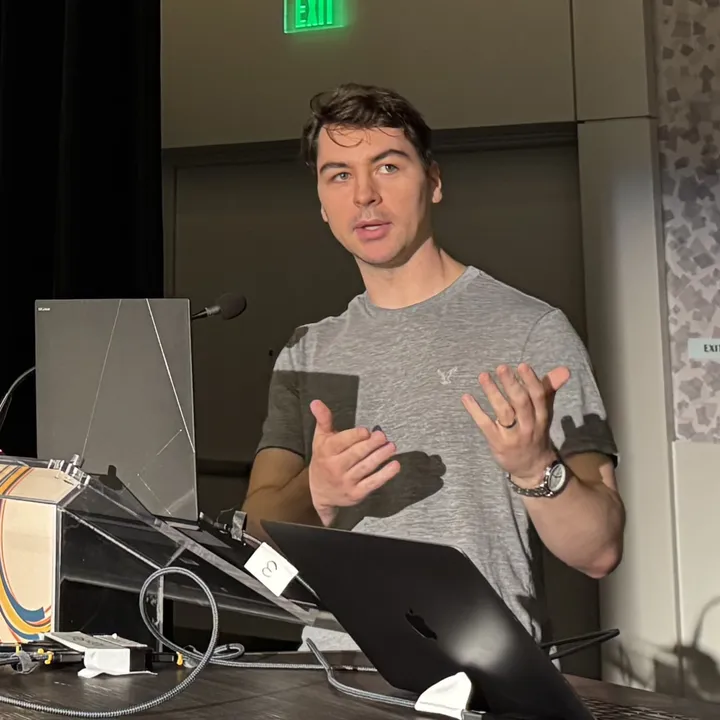
Craig Loewen speaking at a lectern
work

What I work on

Three areas, one thesis: the machine in front of a developer should disappear. Everything below links to something public.

Windows Subsystem for Linux

Product owner · 2018 — present

Linux running properly on a Windows machine. I have owned WSL since 2018 — the strategy, the roadmap, and the case for why Windows should be a good place to do Linux work at all. It is now used by more than five million developers and IT professionals.

  • Led the move to a virtualised architecture on a Microsoft-built Linux kernel: full system call compatibility, and roughly 20x faster file system performance.
  • Took it from a developer curiosity to something enterprises deploy, with security controls that work through Intune and Microsoft Defender for Endpoint.
  • Released WSL as fully open source in 2025, and set up how a Microsoft team and an outside community share one repository.

WSL containers

Product owner · 2026

Letting a Windows application run Linux code as a normal part of its workflow, so local AI and cloud-shaped workloads stop being a separate thing you set up by hand. Shipped to public preview in 2026.

  • Extended the Linux-on-Windows strategy from "a place to develop" to "a runtime other products build on".
  • Shipped a new CLI and set of APIs, presented at Build 2026.

AI in the Windows developer experience

Product manager and prototyper · 2024 — present

The case that AI should show up in the parts of the OS people already use, rather than as a separate destination. I still build the prototypes myself when that is the fastest way to settle an argument.

  • Prototyped an AI-assisted Windows clipboard in C#; it shipped in PowerToys as Advanced Paste, and I am a named inventor on the granted patent.
  • Drove the local-model developer story on Windows — running models on device, and exposing app capability to agents through MCP.
background

How I got here

  1. Aug 2018 — present

    Principal Product Manager · Microsoft

    Product owner for the Windows Subsystem for Linux and other developer features in Windows. Built the multi-year vision, owned the team’s OKRs and success metrics, and worked across Microsoft to ship platform features like Linux GUI app support and enterprise management through Intune and Defender for Endpoint.

  2. May 2017 — Aug 2017

    Product Manager intern · Microsoft

    Windows Console. Wrote functional specs for six features, and proposed and implemented the change to the operating system’s default console colours — the first thing I shipped that The Verge wrote about.

  3. Sep 2016 — Dec 2016

    Process Engineering student · General Motors

    Built a camera system that recognised and sorted defects automatically using optical recognition and PLC logic, and wrote a C# tool that turned OEM machine code into readable quality reports.

  4. Jan 2016 — Apr 2016

    Quality Engineering student · Siemens, Konstanz

    Designed and built a tool calibration system and device that cut calibration time by 40%.

  5. Sep 2013 — May 2018

    BASc Mechatronics Engineering · University of Waterloo

    Co-operative programme with a management sciences option. Graduated ranked first in a class of 110 engineering students.

recognition

Patents and awards

Granted patent — AI-powered Windows clipboard

Named inventor. I wrote the working prototype in C#; it shipped in PowerToys as Advanced Paste and was covered by The Verge and Windows Central.

James Dyson Award, national winner for Canada (2018)

For WatVision, an open source system that lets a visually impaired person use any touch screen with the help of a smartphone. Also won the General Motors innovation award.

First in class of 110

Mechatronics Engineering, University of Waterloo.

Languages

Advanced Korean, conversational French and German.

opinions

How I think about developer tools

  1. 01

    Developer tools are balancing getting as close to the metal as you can, and abstracting away the complexity for the user.

  2. 02

    Defaults win - make it work best out of the box.

  3. 03

    Open source is a product strategy, not a licensing decision.

  4. 04

    Powerful development tools are all about removing barriers between your ideas and actually making them run in a program.

press kit

If you need a bio

Craig Loewen is a Principal Product Manager at Microsoft, where he owns the Windows Subsystem for Linux and parts of the Windows developer experience. He has led WSL since 2018, through its move to a real Linux kernel, its arrival in the enterprise, and its release as fully open source in 2025. He speaks regularly at Microsoft Build, Microsoft Ignite and Ubuntu Summit, writes on Microsoft's developer blogs, and holds a patent for AI-assisted clipboard tooling in Windows. He studied Mechatronics Engineering at the University of Waterloo.

archive

Before all this

6 engineering projects from university and my work terms — an award-winning accessibility device, a quadcopter, a neural network that learned to play a phone game, and a couple of production lines. None of it is what I do now, but it's how I learned to build.

Browse the archive
contact

Find me elsewhere